
1916 Standing Liberty Quarter: A Coveted Collector’s Treasure
Introduction
The 1916 Standing Liberty Quarter is a significant piece in American numismatics, marking the introduction of the iconic Standing Liberty design. This quarter, featuring a distinctive portrayal of Lady Liberty on its obverse, was the first of its series and is highly coveted by collectors. With a limited mintage of 52,000, the 1916 quarter dollar is rare, especially in higher grades.
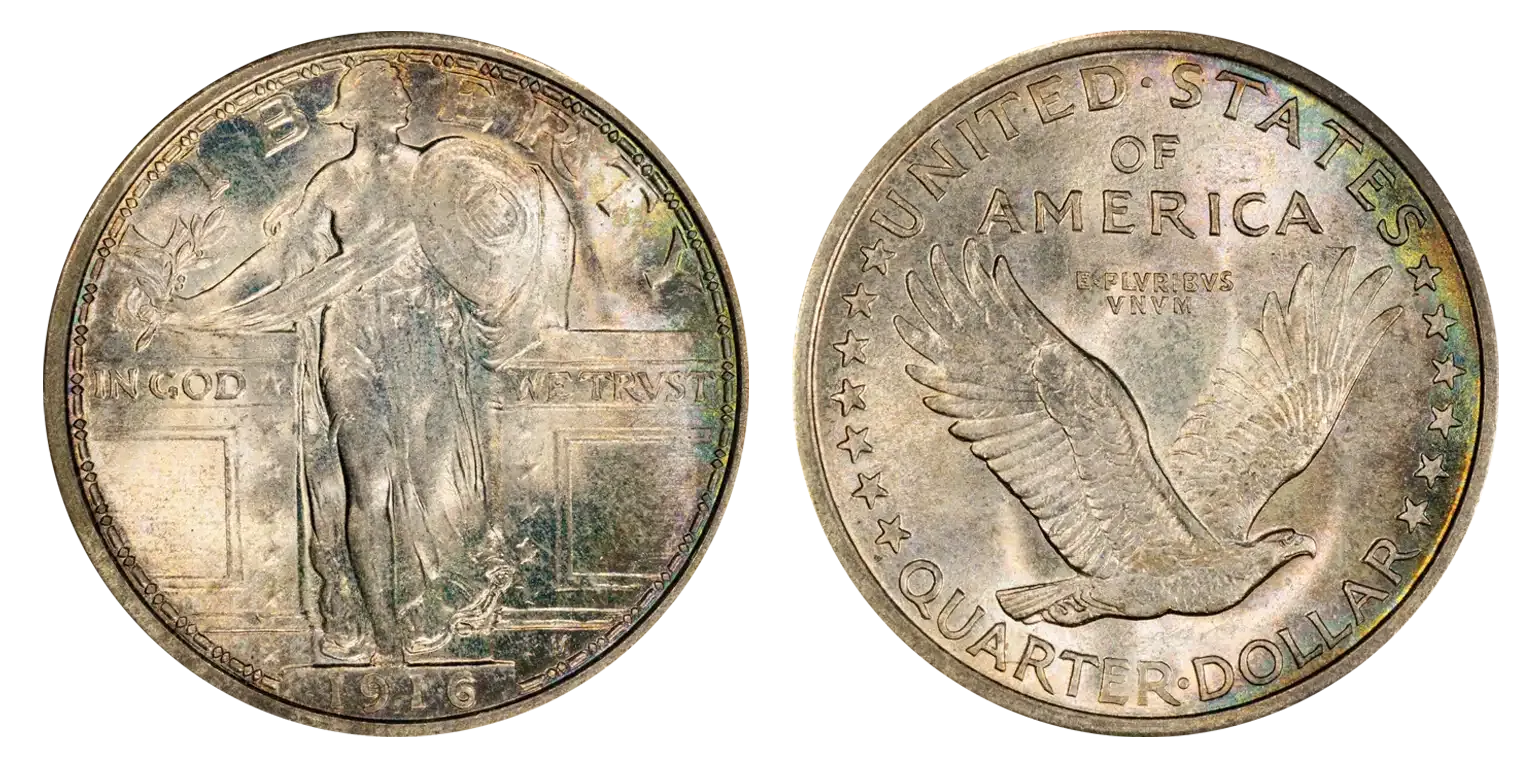
| Coin Specification | Details |
|---|---|
| Denomination | Quarter Dollar |
| Composition | 90% Silver, 10% Copper |
| Diameter | 24.3 mm |
| Weight | 6.25 grams |
| Minted Year | 1916 |
Understanding the historical context and rarity of the 1916 Standing Liberty Quarter enhances its collector appeal. This coin’s unique aesthetic and its status as a pivotal design mark it as a special item in any collection.
Who Is On The Quarter: Value
Price Disclaimer: Coin values provided in this section should be considered as approximate retail ranges, which can significantly vary due to factors such as grade, grading service, auction results, and current market demand.
Value Table
| Coin Condition | Average Value (USD) |
|---|---|
| Circulated | $3,000 – $5,000 |
| Uncirculated (MS60–MS66) | $8,000 – $12,000 |
| High-Grade Uncirculated (MS67+) | $15,000 and up |
| Proof – Clad (proof mint) | Not publicly disclosed |
| Proof – Silver | Not applicable |
| Error Coins (e.g., die chips, doubling) | $5,000 and up, depending on type and severity of error |
Factors That Influence the Value
Mint Mark and Mintage: The 1916 Standing Liberty Quarter marks the inception of the series, and only 52,000 coins were minted, exclusively at the Philadelphia Mint. Its low mintage contributes to its rarity and high demand among collectors.
Condition and Grade: Like most coins, the 1916 Standing Liberty Quarters are valued based on the Professional Coin Grading Service (PCGS) or Numismatic Guaranty Corporation (NGC) ratings, utilizing the Sheldon Scale, where scores range from 1–70. Coins attaining grades at or above MS67 are notably more valuable.
Metal Composition: These quarters are composed of 90% silver and 10% copper, unlike later coins, which transitioned to clad compositions. This silver content adds further numismatic and intrinsic value.
Errors and Varieties: Verified mint errors, such as die chips or doubling, are especially sought after and can significantly elevate a coin’s value. Professional authentication from recognized grading services can establish an error’s legitimacy and affect market price.
To streamline your assessment and identification of the 1916 Standing Liberty Quarter, consider utilizing apps such as the Coin ID Scanner, available on iOS and Android.
Rarity and Errors of the 1916 Standing Liberty Quarter
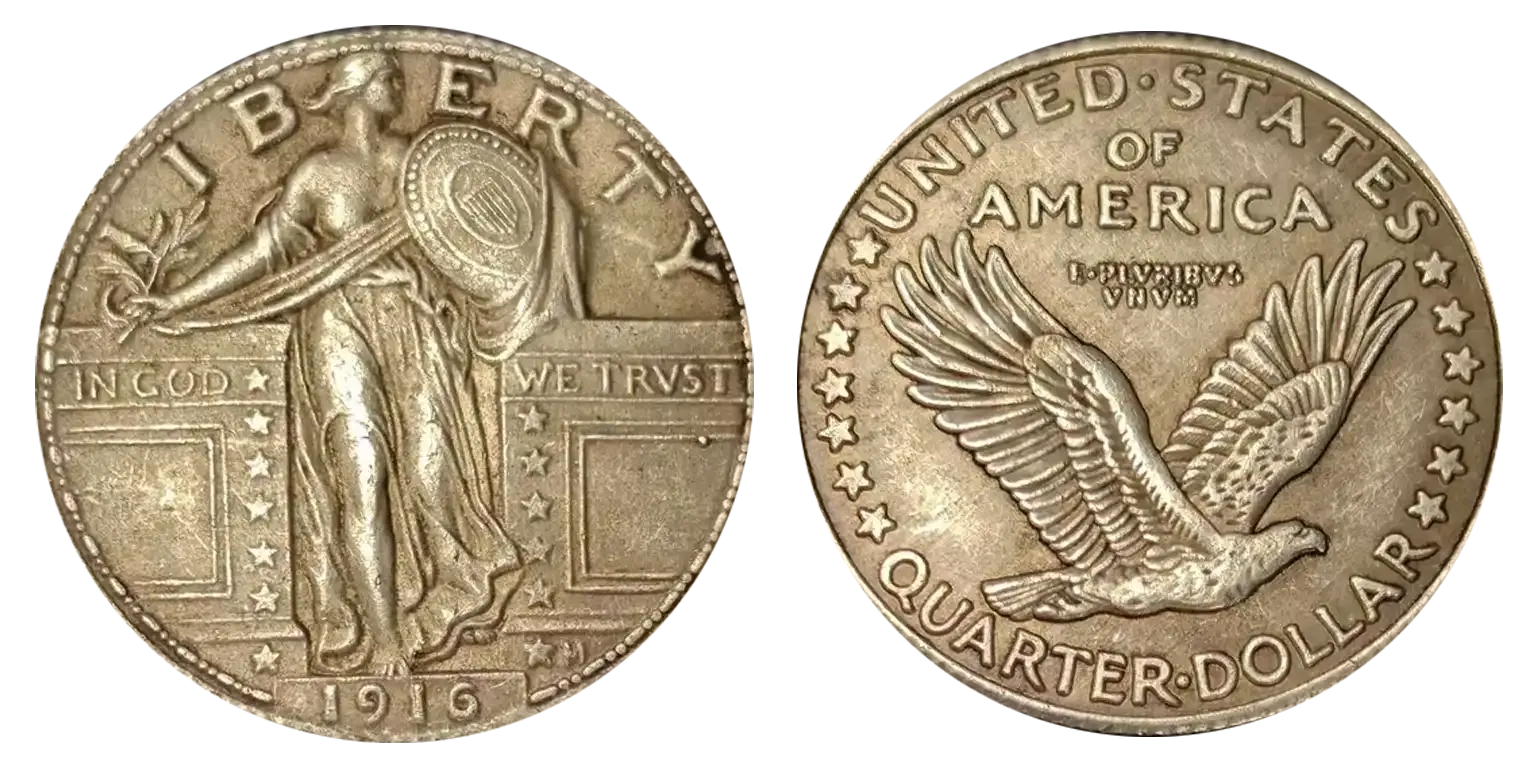
The 1916 Standing Liberty Quarter is not only a key date in numismatic circles due to its limited mintage and historical significance, but it’s also sought after for its unique errors and varieties. Certain minting errors can significantly increase the value of this coveted coin, making it a prized find among collectors.
Known Errors
- Full Head Details:
- Description: Coins that exhibit complete head details on Liberty’s helmet are considered more desirable. These details often wear quickly, so a coin with full head details often indicates it was either lightly circulated or remarkably well-preserved.
- Estimated Value USD: $3,000 – $5,000+
- Rarity Level: Rare
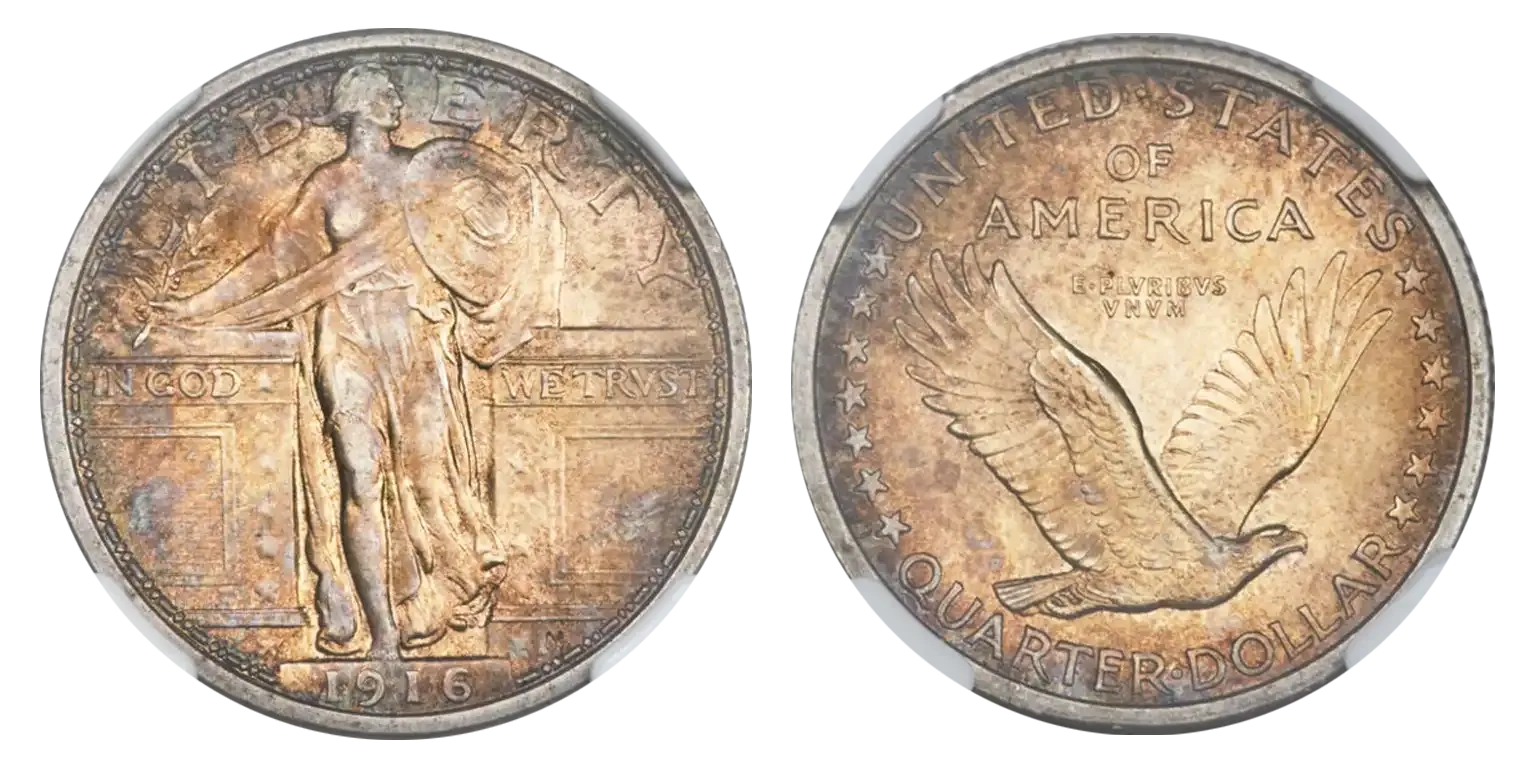
Double Die Obverse (DDO):
- Description: This error occurs when the coin is struck twice with a slight misalignment between the strikes, causing noticeable doubling of elements on the obverse, such as Liberty’s head or the inscriptions.
- Estimated Value USD: $2,000 – $4,500+
- Rarity Level: Very Rare
Die Cracks:
- Description: Visible cracks on the surface of the coin, typically occurring around the edges or across Liberty’s profile, arise from worn or damaged dies.
- Estimated Value USD: $300 – $600+
- Rarity Level: Uncommon
Die Clash Marks:
- Description: Die clashes happen when obverse and reverse dies collide without a blank planchet between them, resulting in mirrored images showing on opposite sides of the coin.
- Estimated Value USD: $400 – $800+
- Rarity Level: Rare
Repunched Mint Mark (RPM):
- Description: This error is characterized by a mint mark that has been punched more than once in different locations, creating a shadowed effect.
- Estimated Value USD: $500 – $1,200+
- Rarity Level: Rare
Price Impact Summary
Minor Errors: Minor flaws like small die chips or light defects usually have a modest impact on coin value, increasing worth slightly over standard circulated pieces.
Major Errors: Dramatic errors, such as major die misalignment or comprehensive doubling, can exponentially increase a coin’s market value due to their visual appeal and rarity.
Condition Impact: Coins that maintain higher Mint State grades amplify the value of these errors exponentially, especially those graded MS67 and above.
Authentication: To verify authenticity and protect investments, having high-grade errors authenticated and graded by reputable services like PCGS or NGC is crucial. Certification not only assures collectors of the coin’s true condition and error type but often enhances its resale value.
[1916 Standing Liberty Quarter Image Placeholder - Ensure detailed error images are captured to assist collectors.]
Mint Marks & Mintage
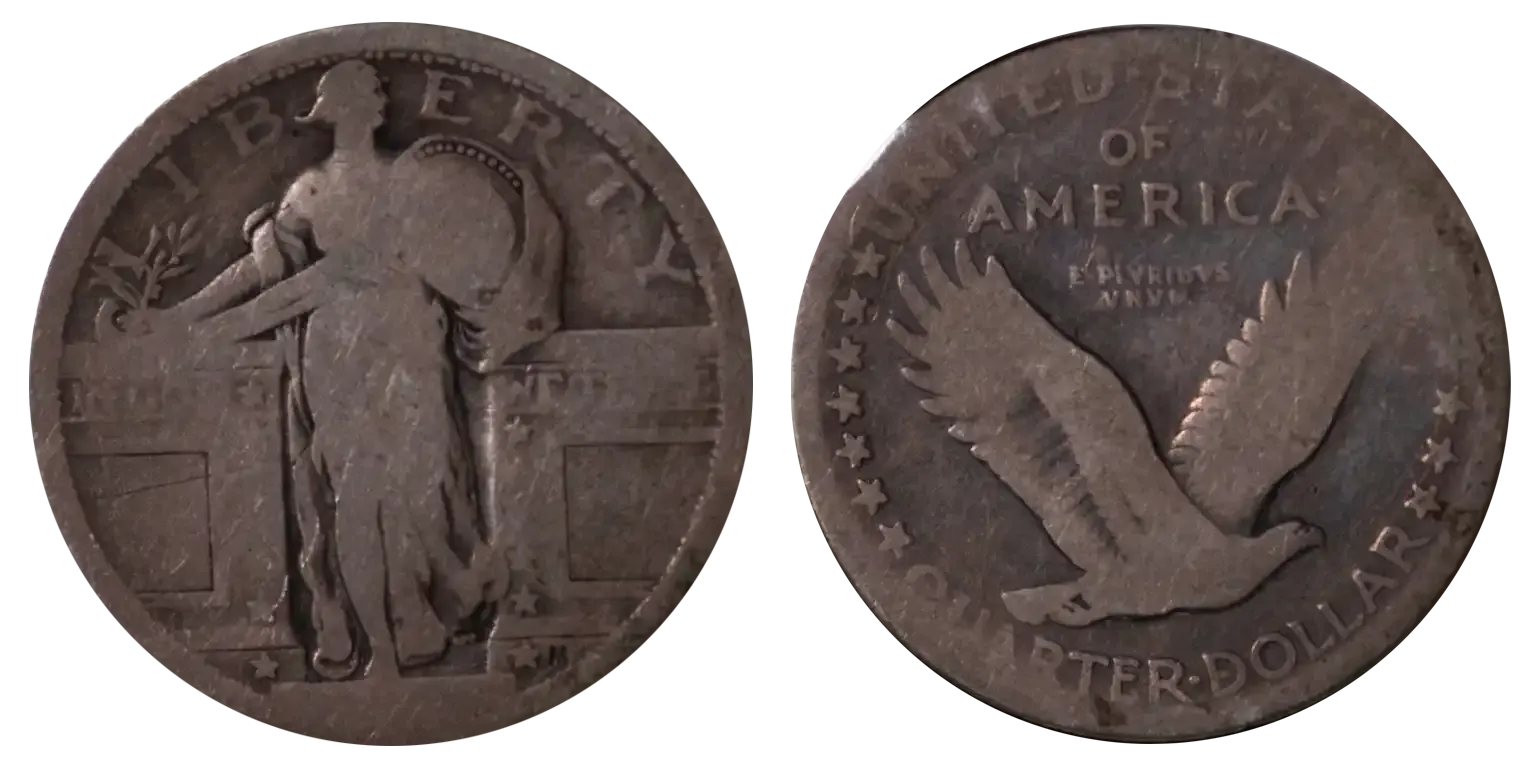
Finding a mint mark on a coin can dramatically influence its value and rarity, and the 1916 Standing Liberty Quarter is no exception. For this inaugural issue, the primary mint location was the Philadelphia Mint, which did not include a mint mark on the coin. Therefore, if you come across a 1916 quarter without a mint mark, it was struck in Philadelphia.
Philadelphia’s design modifications led to a modest mintage for the 1916 Standing Liberty Quarter, totaling only 52,000 pieces. This limited production makes the coin one of the most sought-after by collectors. While well-circulated examples are all that many collectors can aspire to acquire, even those command significant prices due to the quarter’s rarity.
Mintage Table
| Mint Location | Mint Mark | Year | Quantity Minted |
|---|---|---|---|
| Philadelphia | None | 1916 | 52,000 |
Given the limited mintage of the 1916 quarter, determining its scarcity is straightforward when compared to other years of the Standing Liberty series. The absence of additional mint locations or varying mint marks in 1916 simplifies its identification process for collectors.
Among hobbyists and numismatists, understanding the composition and origin of a coin can add depth to one’s appreciation. While the striking of the 1916 Standing Liberty Quarter did not involve additional mint marks, its mintage speaks volumes about its historical and collectible significance.
Who Is On The Quarter Facts and Trivia
Design Details
Obverse: The obverse of the 1916 Standing Liberty Quarter features the image of Lady Liberty standing with one arm holding a shield and the other holding an olive branch. The portrait is oriented centrally, symbolizing both defense and peace.
Reverse: The reverse side showcases an eagle in flight, flanked by seven stars on each side, symbolizing unity and freedom.
Inscriptions: “LIBERTY,” “IN GOD WE TRUST,” and “1916”.
Release Information
Release Date: 1916.
Series Context: This quarter marks the inception of the Standing Liberty series, succeeding the Barber Quarter and introducing a new era in American coinage design.
Historical Significance: The 1916 Standing Liberty Quarter represents a transition in U.S. coinage aesthetics, introduced as part of efforts to beautify American currency under the influence of the early 20th-century artistic renaissance.
Quick Facts
- The 1916 issue was one of the lowest mintage totals in the Standing Liberty series, making it highly sought after by collectors.
- The initial design faced controversy and revision in 1917 due to public perception of Lady Liberty’s partial nudity.
- The Standing Liberty design was created by Hermon Atkins MacNeil, known for his sculptures and artwork reflecting Native American culture and heritage.
- This quarter was part of a broader movement during the 1910s to revamp American coinage with more artistic designs.
Collecting the 1916 Standing Liberty Quarter
Collecting the 1916 Standing Liberty Quarter can be a thrilling endeavor for both novice and experienced numismatists. Here’s a practical guide to help you start or expand your collection:
Research Before You Buy
Start by familiarizing yourself with the history and significance of the 1916 Standing Liberty Quarter. Understanding its context within the series will enhance your appreciation and guide your collecting decisions.Set a Budget
Determine how much you’re willing to spend on this rare coin. The 1916 Standing Liberty Quarter’s values can vary widely based on condition and rarity, so having a budget in mind helps focus your purchasing strategy.Source Reputable Dealers
Seek out established coin dealers or auction houses specializing in early 20th-century U.S. coins. Building relationships with trustworthy sources can ensure that you’re purchasing authentic coins in the advertised condition.Use Coin Grading Services
To maximize your investment, consider purchasing coins that have been graded by reputable services such as PCGS or NGC. These certifications provide assurance of the coin’s authenticity and quality.Utilize Technology
Take advantage of modern tools like the Coin ID Scanner App, available on iOS and Android. This app can help verify coin details and assess values accurately.Join a Numismatic Community
Engage with other collectors through forums, clubs, or social media groups. Participating in these communities can provide valuable insights and keeping you informed on market trends.Monitor Market Trends
Stay updated on coin market fluctuations. Understanding how historical events and market sentiments affect coin values will help you make informed decisions when adding or selling coins from your collection.
1916 Standing Liberty Quarter FAQ
What makes the 1916 Standing Liberty Quarter so valuable?
The 1916 Standing Liberty Quarter is highly valued due to its limited mintage of only 52,000 coins. This rarity increases demand among collectors, often leading to higher prices compared to other years in the series.
How much is a 1916 Standing Liberty Quarter worth?
The value of a 1916 Standing Liberty Quarter can vary significantly depending on its condition and rarity features. In average circulated condition, it might be worth several thousand dollars, but well-preserved and higher-grade examples can fetch much higher prices at auctions.
Where can I find a 1916 Standing Liberty Quarter for sale?
1916 Standing Liberty Quarters can frequently be found at reputable numismatic dealers, auctions, or online marketplaces. It’s important to verify the credibility of the seller and the authenticity of the coin before purchasing.
Does the 1916 Standing Liberty Quarter contain any notable errors?
While the 1916 Standing Liberty Quarter does not have widely recognized error varieties, collectors are always advised to inspect coins closely for any minting anomalies that might increase value. Professional grading can help determine these details accurately.
How can I verify the authenticity of a 1916 Standing Liberty Quarter?
Authenticity can be confirmed by consulting with a professional numismatist or submitting the coin to a reputable grading service. Features such as weight, design details, and mint mark consistency are key factors in verifying a genuine piece.
What is a dateless Standing Liberty Quarter, and is it worth anything?
A dateless Standing Liberty Quarter has lost its date due to wear and tear. While their value is generally lower than dated versions, specific collector interest or historical context can make these coins desirable to some.
Why doesn’t the 1916 Standing Liberty Quarter have a mintmark?
The 1916 Standing Liberty Quarter was exclusively minted at the Philadelphia Mint, which did not use a mint mark on this series. This can help in identifying the mint origin when purchasing or evaluating the coin.
Can I include a 1916 Standing Liberty Quarter in my coin collection?
Absolutely, the 1916 Standing Liberty Quarter is a prized addition for any numismatic collection due to its historical significance and rarity. Ensure proper handling and storage to maintain its condition and value.
What should I consider when grading a 1916 Standing Liberty Quarter?
When grading a 1916 Standing Liberty Quarter, consider factors like surface condition, strike quality, and any wear on the design, especially on high points like Liberty’s head and the shield. Professional grading can often provide a consistent benchmark for value.
How do market conditions affect the value of the 1916 Standing Liberty Quarter?
Market conditions, including collector demand and economic factors, can affect the coin’s value. High demand or economic stability can drive up prices, while changes in collector interest or economic shifts could influence the market.