
1970-S Washington Quarter (Proof)
Introduction
The 1970-S Washington Quarter (Proof) stands out as a fine example of mid-20th century U.S. numismatic art. Minted at the San Francisco Mint, these quarters are cherished by collectors for their intricate design and proof quality. Known for high detail and brilliant luster, proof quarters like the 1970-S represent a different category than their circulated counterparts, often being struck from specially polished dies.
| Specification | Details |
|---|---|
| Composition | Clad (Copper-Nickel) |
| Diameter | 24.26 mm |
| Weight | 5.67 grams |
| Mint Mark | S |
While exact mintage figures are not publicly disclosed for proof sets, their distinct proof quality often makes them a collectible favorite, appreciated for both their aesthetic appeal and historical significance.
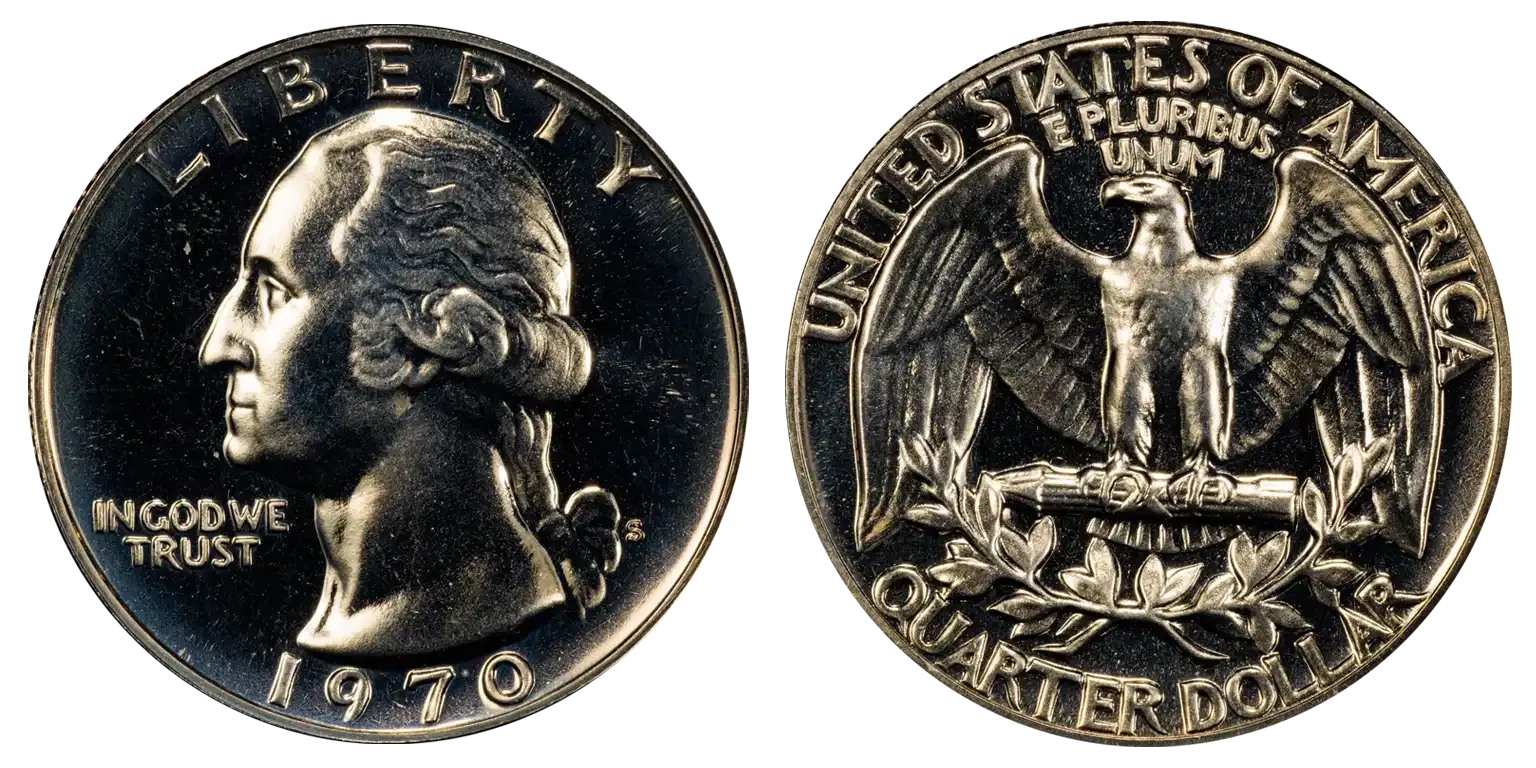
Who Is On The Quarter Value
Understanding the value of a 1970-S Washington Quarter (Proof) can be rewarding for collectors and enthusiasts alike. Please note that coin values are approximate retail ranges and may vary depending on specific factors such as grade, grading service used, auction results, and current market demand.
| Condition | Average Value (USD) |
|---|---|
| Circulated | Not applicable |
| Uncirculated (MS60–MS66) | $5 – $8 |
| High-Grade Uncirculated (MS67+) | $15 – $100+ |
| Proof – Clad (proof mint) | $3 – $5 |
| Proof – Silver (if applicable) | Not applicable |
| Error Coins | $30 – $500+ |
Factors That Influence the Value
Mint Mark and Mintage: The “S” mint mark denotes coins struck at the San Francisco Mint. As a proof coin, the 1970-S Washington Quarter was not intended for general circulation, which contributes to its unique position among collectors.
Condition and Grade: Coin grading follows the Sheldon Scale, ranging from 1 (poor) to 70 (perfect). Higher grades, especially well-preserved proof examples, fetch higher prices.
Metal Composition: This edition consists primarily of a clad metal mix, lacking any significant silver content that could affect intrinsic value.
Errors and Varieties: Verified mint errors significantly increase a coin’s desktopworth. Collectors seek these variations, such as die cracks or doubling, often paying premiums for unique and authenticated examples.
Rarity and Errors of the 1970-S Washington Quarter (Proof)
The 1970-S Washington Quarter (Proof) is a popular collectible among numismatists due to its fascinating error varieties that pique collector interest. While not highly rare on its own, certain errors have elevated the desirability and value of individual specimens. Collectors specifically seek out these anomalies because even minor imperfections can lead to significant price premiums. Here are some of the most noteworthy errors and their impact on value.
Known Errors
Doubled Die Obverse (DDO)
This error occurs when the die used to strike the coin has a misaligned design, resulting in a noticeably doubled image on the obverse side of the quarter. Most visible on the inscriptions, this error can drastically increase a coin’s value, with estimated values ranging from $200 – $1,000+ depending on the clarity of the doubling.Caption: Notable doubling on Washington’s portrait.
Clipped Planchet
A clipped planchet error transpires when the coin blank is improperly cut, leading to a piece missing from the coin’s edge. This error appears quite dramatic, making it a sought-after novelty among collectors. Values can range from $50 – $200+, contingent on the size and location of the clip.
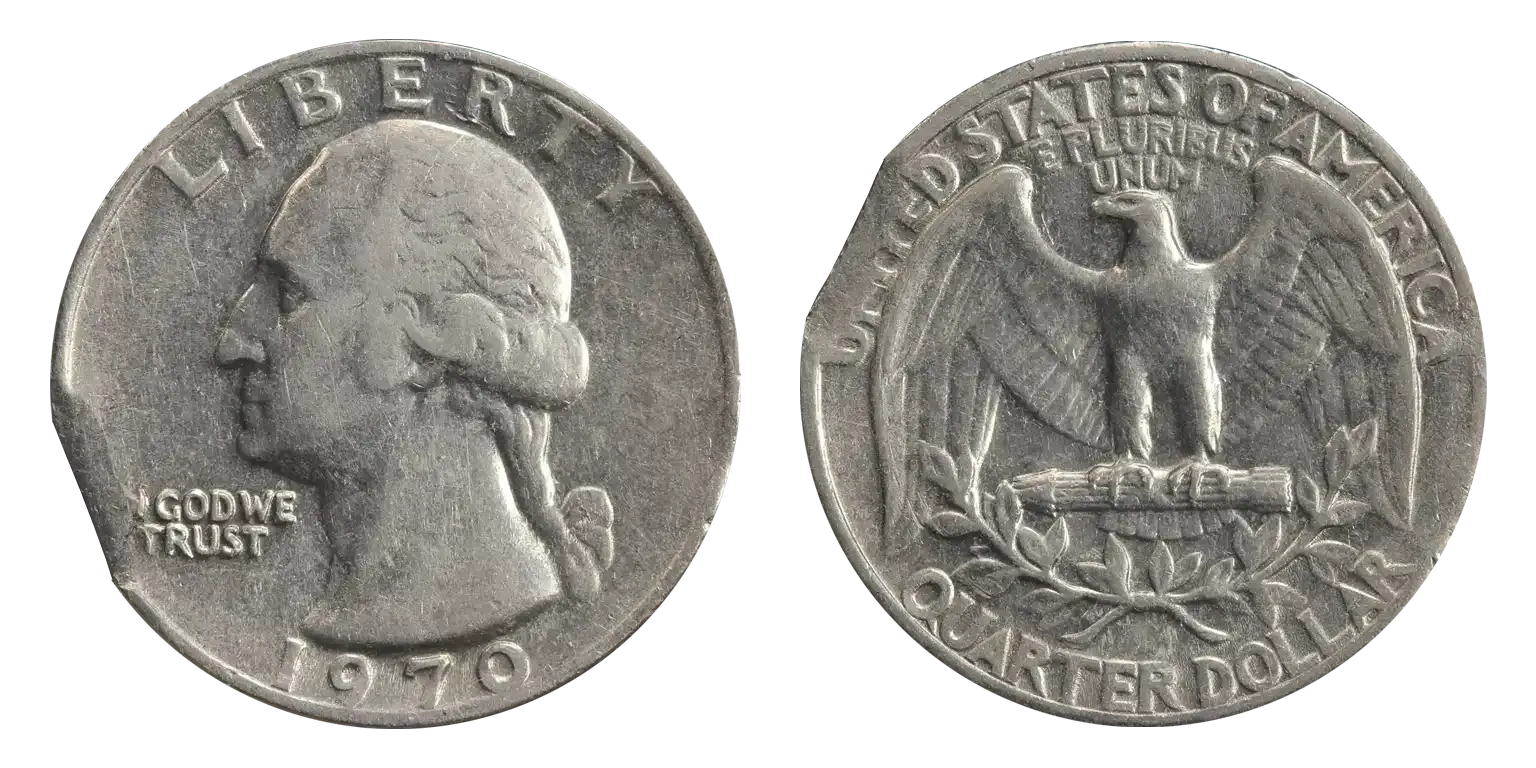
Caption: Visible clip on the edge of the quarter.
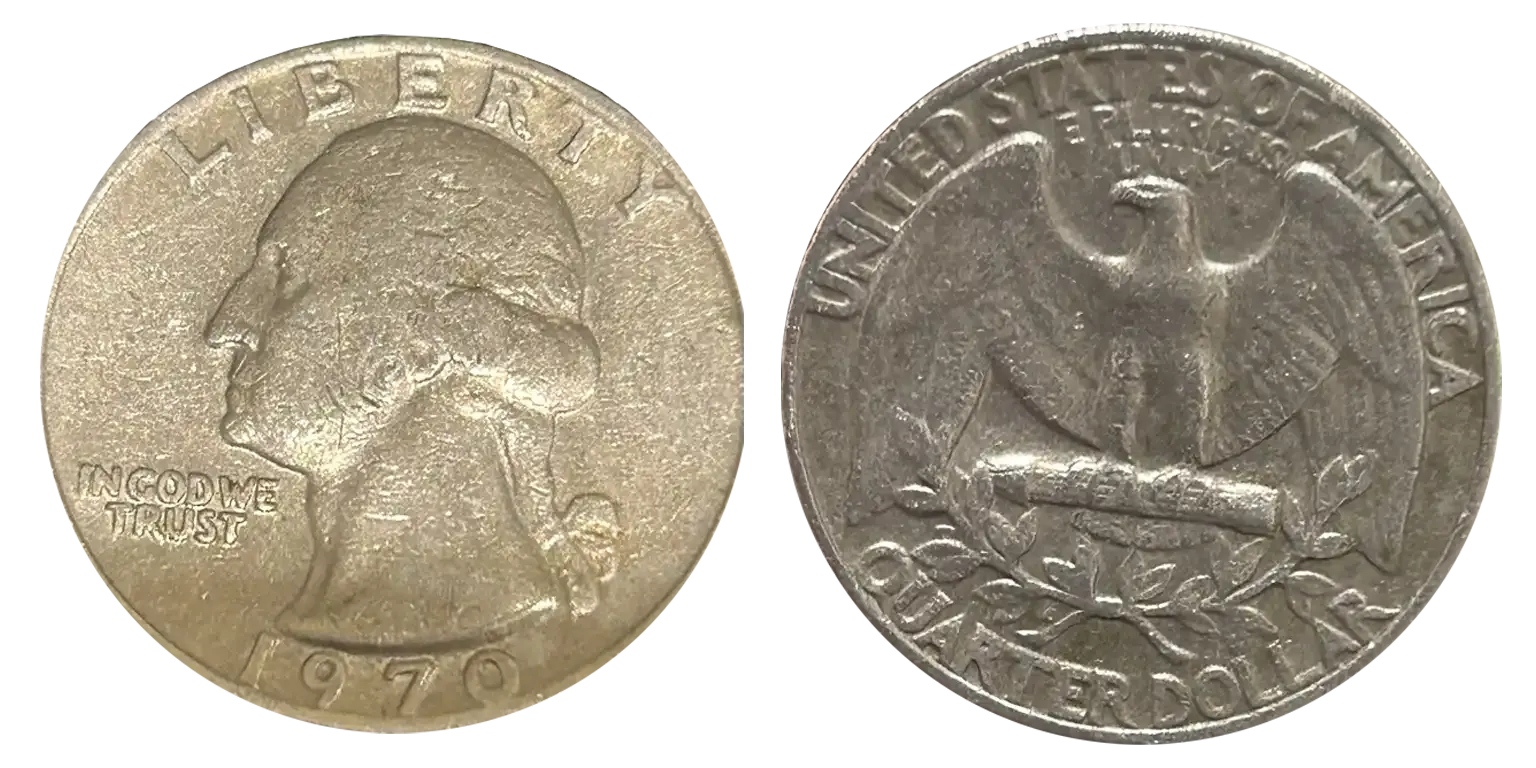
Incorrect Planchet
Occurs when a coin is struck on a planchet intended for another denomination, this error manifests in unexpected metal content or size. While uncommon, such coins can fetch premium prices often commanding between $300 – $700+ in auctions.Caption: Struck on a wrong planchet intended for a different denomination.
Price Impact Summary
Minor Errors
Small die chips or slight blemishes generally have a limited impact on the coin’s value unless they are part of a wider, known variety.Major Errors
The value of coins featuring dramatic or visually obvious errors, such as significant doubling, can substantially outperform their typical counterparts, attracting vigorous bidding at auctions.Condition Impact
Coins in higher Mint State conditions dramatically enhance the overall value of error coins due to their superior aesthetic appeal and preservation.Authentication
The importance of third-party verification, such as from PCGS or NGC, cannot be overstated. Authentication provides credibility and assures potential buyers of the error’s legitimacy and quality.
Collectors and investors alike find great interest in these variations, but it’s the subtle nuances and verification of genuine errors that truly set these coins apart in the numismatic market.
Mint Marks & Mintage
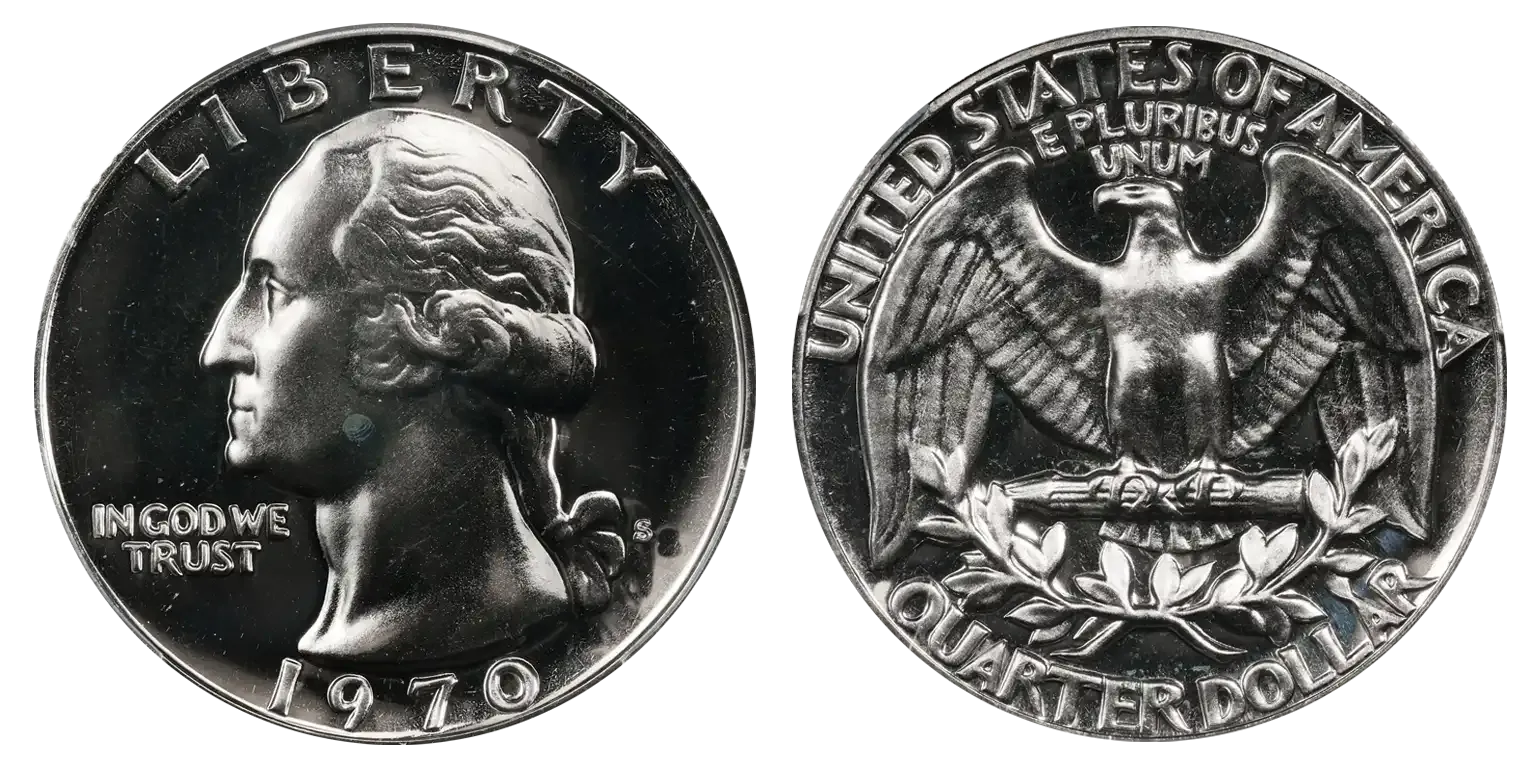
Mint marks and mintage figures are pivotal in understanding the value and scarcity of coins like the 1970-S Washington Quarter (Proof). The “S” denotes the coin was struck at the San Francisco Mint, known for producing coins with high-quality finishes, often for proof sets. This mint mark is located on the reverse side of the quarter, just below the eagle’s tail; it’s a key identifier for collectors.
Because the 1970-S is a proof coin, all specimens were produced with a special minting process that ensures a mirror-like finish, often sought after by numismatists. In terms of mintage numbers, these proof coins were not produced for regular circulation but were instead included in collector sets, with the San Francisco Mint typically issuing hundreds of thousands for each year.
| Mint Mark | Location | Mintage Numbers (Approx.) |
|---|---|---|
| S | San Francisco | 2,632,810 |
This table reflects the approximate number of proof quarters minted, emphasizing their limited availability in comparison to regular circulation coins. The controlled mintage and unique mint mark make 1970-S proof quarters particularly attractive for collectors interested in acquiring a well-preserved piece of numismatic history.
1970-S Washington Quarter (Proof)
Who Is On The Quarter Facts and Trivia
Design Details
Obverse: The obverse of the 1970-S Washington Quarter features a right-facing bust of George Washington, the first President of the United States, designed by John Flanagan. His likeness serves not only as a historical tribute but symbolically connects American ideals of leadership and independence.
Reverse: The coin’s reverse displays an eagle with outstretched wings, gripping a bundle of arrows above an olive branch, embodying the nation’s readiness to defend peace. This imagery accompanies the inscriptions “UNITED STATES OF AMERICA” and “QUARTER DOLLAR.”
Inscriptions: “LIBERTY,” “IN GOD WE TRUST,” “1970.”
Year: 1970
Release Information
Release Date: 1970
Series Context: Part of the regular issue of Washington Quarters, the 1970-S is notably a proof issue, struck with higher quality care and detailing for collectors, indicative of its mint mark placement.
Historical Significance: The 1970-S Washington Quarter marks a period of transition in U.S. coinage with its clad composition. Its proof designation highlights advancements in mint technology and collector interest.
Quick Facts
- Over 2.6 million proof coins were manufactured in 1970 with the “S” mint mark, indicating its origin from the San Francisco Mint.
- The design has remained largely unchanged since 1932, emphasizing its cultural recognition and numismatic value.
- John Flanagan’s design was selected following a national competition held to commemorate the bicentennial of George Washington’s birth.
Collecting the 1970-S Washington Quarter (Proof)
Begin with Research: Understand the historical context and production features of the 1970-S Washington Quarter (Proof). Familiarize yourself with its specifications and mintage to prepare for collection and valuation.
Focus on Proofs: The 1970-S is notably a proof coin, crafted with exceptional detail and clarity. When collecting, prioritize finding coins with no visible blemishes or scratches to retain maximum numismatic value.
Check for Errors and Varieties: Stay updated on known errors and varieties that can significantly increase a coin’s value. Utilize resources such as auction records and reputable coin forums to identify these variants.
Grading Matters: Consider professional grading for high-grade proofs, especially if you suspect a coin to be MS67 or higher. The grading can enhance the coin’s marketability and potential resale value.
Storage and Display: Store your 1970-S Washington Proof Quarters in a climate-controlled environment using Mylar flips or slab holders to prevent tarnishing. Proper storage ensures your coins remain in pristine condition.
Regularly Update your Collection: The market conditions and collector interest can fluctuate, so keep track of market news and trends. This practice helps you decide on consolidation or acquisition decisions.
Utilize Technology: Make use of apps like the Coin ID Scanner App on iOS and Android to assist in authentication and valuation of coins on-the-go. These tools are invaluable for quick checks at coin shows or dealerships.
1970-S Washington Quarter (Proof) FAQs
What is a 1970-S Washington Quarter (Proof)?
The 1970-S Washington Quarter is a special proof coin minted at the San Francisco Mint. Proof coins are struck using specially polished dies and planchets, resulting in a coin with a highly reflective surface and intricate details, primarily made for collectors.
How can I identify the value of a 1970-S Washington Quarter (Proof)?
To determine the value of a 1970-S Washington Quarter (Proof), consider the coin’s condition, desirability, and whether it has been graded by a professional service like the PCGS or NGC. Checking recent auction sales and consulting price guides can also provide insights into its current market value.
Are there any errors or varieties in the 1970-S Washington Quarter (Proof)?
While proof coins are struck with precision, there are occasional errors or varieties, such as doubling or variations in frosting. It’s important to examine these coins closely or consult a professional to determine if any unique traits are present.
What is the significance of the 'S' mint mark on the 1970-S Washington Quarter?
The ‘S’ mint mark indicates the coin was minted at the San Francisco Mint. For collectors, mint marks can affect a coin’s collectible interest and rarity, as some mint productions are more limited than others.
Is the 1970-S Washington Quarter (Proof) made of silver?
No, the 1970-S Washington Quarter (Proof) is not struck in silver. Instead, it is a copper-nickel clad coin. Silver proof coins were not introduced again until later, making this proof part of the regular nickel-clad issues of the era.
How should I store and protect my 1970-S Washington Quarter (Proof) coin?
For optimal preservation, store your 1970-S Washington Quarter (Proof) in a cool, dry environment, away from direct sunlight. Using a protective holder or a coin album can help prevent scratches and preserve the coin’s original luster and detail.
How rare is the 1970-S Washington Quarter (Proof)?
Though not exceedingly rare, the 1970-S Washington Quarter (Proof) holds interest due its limited production as a proof coin. Availability from various collectible sets contributes to its accessibility, but top-conditioned or graded examples can be less common.
Where can I find the current prices for a 1970-S Washington Quarter (Proof)?
You can find current prices for a 1970-S Washington Quarter (Proof) by browsing online auction sites, checking numismatic price guides, or visiting coin shows where dealers can offer real-time market insights. Prices fluctuate based on collector demand and market trends.
Why do collectors seek the 1970-S Washington Quarter (Proof)?
Collectors often seek the 1970-S Washington Quarter (Proof) due to its craftsmanship, eye appeal, and as part of the broader Washington quarter series. Its proof status means it is a desirable addition for those completing both modern and historical U.S. coin collections.
What should I do if I suspect my 1970-S Washington Quarter (Proof) has a unique variation?
If you suspect your 1970-S Washington Quarter (Proof) may have a unique variation, consider having it authenticated and graded by a professional service. High-definition images and evaluations from reputable numismatists can confirm any suspicions of unusual traits.